How to Clean a Pasta Maker (Without Damaging It)
Cleaning a pasta maker is one of those jobs people tend to overcomplicate. The instinct is to treat it like any other kitchen tool—soap, water, quick rinse. That’s exactly what you shouldn’t do.
Most pasta makers are mechanical devices with internal rollers and gears. Water can cause rust, damage internal parts, and shorten the lifespan of the machine. The good news is that cleaning them properly is straightforward once you understand the process.
This guide walks through how to clean a pasta maker safely, what to avoid, and how to keep it working as it should.
Why You Should Never Wash a Pasta Maker with Water
If you take one thing away from this, it’s this: do not run your pasta maker under water or put it in a dishwasher.
Even high-quality stainless steel models have internal components that are not designed for moisture. Water can:
- Cause rust inside the rollers
- Affect smooth operation
- Lead to dough sticking over time
- Reduce the lifespan of the machine
Instead, cleaning relies on dry methods and a bit of patience.
What You’ll Need
You don’t need specialist cleaning products. Just a few simple pasta tools and household items:
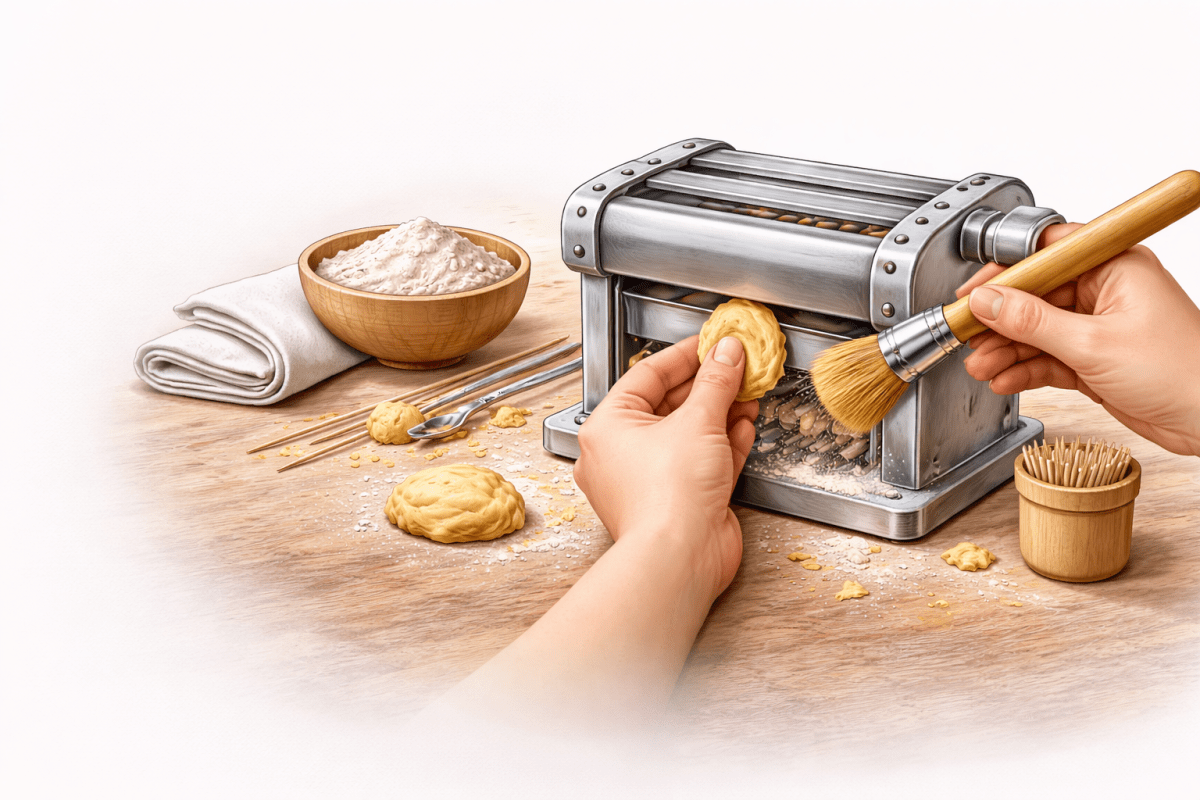
- A dry brush (pastry brush or soft cleaning brush)
- A wooden skewer or toothpick
- A clean, dry cloth
- Optional: a small amount of dry dough
That’s enough to handle most cleaning tasks.
Step 1: Let the Machine Dry First
If you’ve just finished making pasta, don’t clean the machine immediately.
Fresh dough is soft and sticky, which makes it harder to remove. Leave the pasta maker for 20–30 minutes so any residue dries slightly. Once dry, it becomes brittle and much easier to brush away.
Step 2: Brush Off Loose Flour and Dough
Use a dry brush to remove flour and small pieces of dough from the rollers and outer surfaces.
Work gently but thoroughly. Pay attention to:
- The roller gaps
- The edges of the cutters
- The underside of the machine
Avoid forcing anything deeper into the mechanism.
Step 3: Use Scrap Dough to Clean the Rollers
This is a simple but effective trick.
Take a small piece of leftover dough and run it through the rollers a few times. As it passes through, it picks up dried residue and clears the surface.
Discard the dough afterwards—don’t cook it.
This method is especially useful if you notice dough sticking during use.
Step 4: Remove Stubborn Bits Carefully
If you see small pieces of dried dough stuck in tight areas, use a wooden skewer or toothpick to gently dislodge them.
Avoid metal tools. They can scratch the rollers or damage the cutters.
Work slowly and only remove what’s visible—there’s no need to dismantle the machine for routine cleaning.
Step 5: Wipe the Exterior
Use a dry cloth to wipe down the outside of the pasta maker.
If needed, you can use a slightly damp cloth on the exterior only, but never allow moisture near the internal rollers or cutters.
Dry immediately after wiping.
Deep Cleaning (When Needed)
You don’t need to deep clean your pasta maker often, but occasional maintenance helps.
If your machine allows it, you can remove detachable cutter attachments and clean them separately using the same dry method.
Some models allow partial disassembly, but only do this if the manufacturer recommends it. Otherwise, you risk misalignment or damage.
What to Avoid
These are the most common mistakes:
Using water inside the machine
This is the fastest way to damage it.
Using soap or cleaning chemicals
Not necessary and can leave residue behind.
Putting it in the dishwasher
Even if it looks sturdy, it isn’t designed for this.
Scraping with metal tools
This can damage rollers and affect performance.
How Often Should You Clean a Pasta Maker?
After every use.
It doesn’t take long—usually just a few minutes—and it prevents buildup that becomes harder to remove later.
Regular cleaning also keeps your pasta tools working smoothly and helps maintain consistent results.
Storage Tips to Keep It Clean
Cleaning is only part of the process. How you store your pasta maker matters too.
- Keep it in a dry place
- Cover it to prevent dust buildup
- Avoid storing near moisture or steam (like above a kettle)
If you use it regularly, consider keeping it accessible but protected rather than packed away tightly.
When to Replace or Service a Pasta Maker
With proper care, good pasta makers can last for years.
However, you may notice signs of wear over time:
- Rollers becoming stiff or uneven
- Dough sticking despite cleaning
- Visible rust or corrosion
At that point, it may be worth replacing the machine or checking if parts can be serviced or replaced.
Final Thoughts
Cleaning a pasta maker is less about effort and more about doing the right things—and avoiding the wrong ones.
No water, no shortcuts, no harsh cleaning. Just dry methods, regular maintenance, and a bit of care.
Once it becomes part of your routine, it takes minutes and keeps your pasta makers and pasta tools working exactly as they should.